

What is Artificial Grass?
In simple terms, artificial grass is a layer of synthetic fibers designed to imitate the aesthetic look and practical function of real grass.
Artificial grass first appeared as “Astroturf” in the mid-1960s when it was used in the Houston Astrodome. Since then artificial grass has undergone several transformations. What began as an ugly plastic-looking ground cover in a few stadiums has evolved into something else entirely!
Artificial grass, also known as artificial turf, is a synthetic grass made to look like natural grass. It is usually made from plastic materials and is used in applications where real grass would be difficult to grow or maintain, such as in very hot climates, or on surfaces that are too hard for real grass to take root.
Modern artificial grass products are manufactured using materials and colors that perfectly mimic natural grass. This has led to a drastic increase in the popularity of synthetic grasses for both residential and commercial applications. The affordability, minimal maintenance requirements, water savings, and eco-friendliness of artificial grass has turned this incredibly realistic alternative to natural grass into a common feature of homes and businesses throughout Texas.
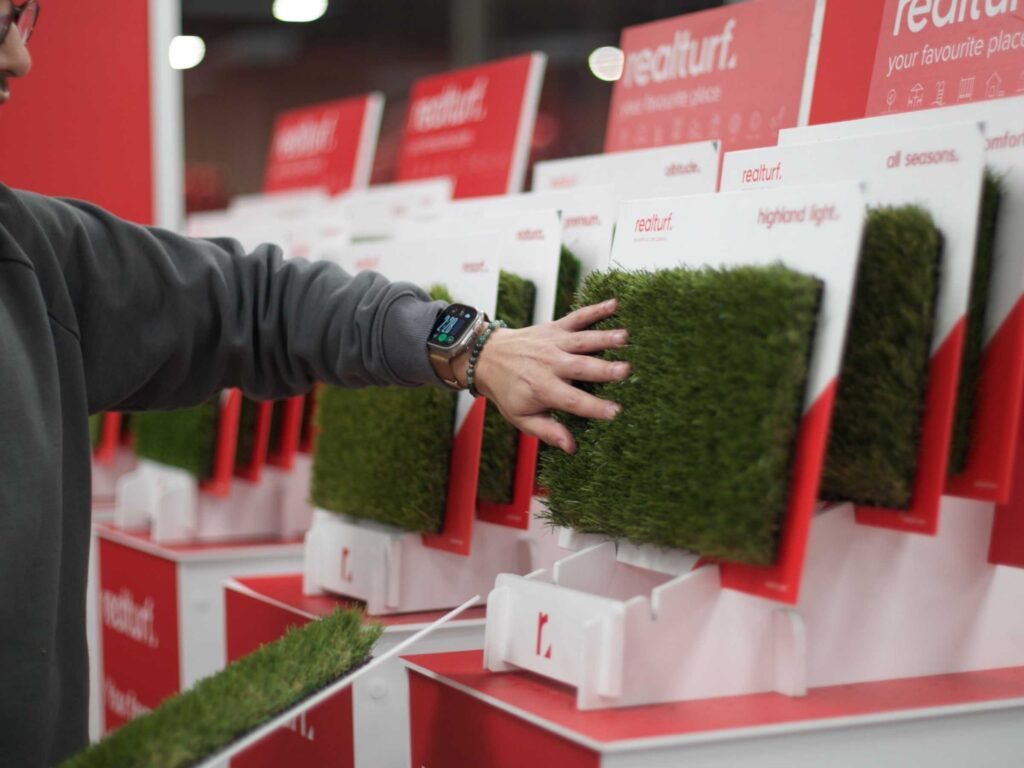
What Makes Artificial Grass Look Realistic?
Artificial grass is more than just the surface layer of individual fibers that you see, it’s comprised of several different components that work together to provide a realistic look and feel.
Components of Artificial Grass:
- Yarn/Fibers — Used to create the individual grass blades
- Backing — Holds fibers in place & provides drainage
- Thatch — Cushions turf & supports fibers
- Base — Compacted layer of materials that support the turf and facilitate drainage
- Infill — Keeps artificial grass blades upright & acts as ballast

Types of Artificial Grass
When most people hear “Artificial Grass,” they immediately start thinking of the lawn from The Brady Bunch or the turf at a mini-golf course. The plastic-looking turf products of the past don’t even come close to the true-to-life beauty of the best modern artificial grass products.
Not all artificial grasses are created equal, and there are many different types of artificial grass, each designed with a specific application in mind. For example, some artificial grasses are designed to be used in high-traffic areas, while others are designed as pet-friendly ground covers.
Artificial grass is manufactured using one of the following materials:
- Polypropylene
- Polyethylene
- Nylon
What are the Benefits of Artificial Grass?
Aesthetics
Artificial grass offers a consistently lush and vibrant appearance that enhances the beauty of your outdoor space, maintaining its aesthetic appeal throughout the year.
Low Maintenance
Artificial grass saves you from the arduous tasks of mowing, weeding, and fertilizing, making it an ideal choice for those seeking a low-maintenance lawn.
Eco-Friendly
Artificial grass reduces the need for chemicals like fertilizers, pesticides and gas-powered landscaping equipment, helping to reduce your overall carbon footprint.
Kid-Friendly
Artificial grass provides a safe and comfortable surface for children to play on, without the worry of mud, allergies, grass stains, or tripping hazards.
Save Time
The low maintenance requirements mean you’ll have more time to spend relaxing or hanging out with family, friends, or whatever you’d like… the time is yours!
Pet-Friendly
Pet-friendly synthetic turf provides a durable, long-lasting ground cover that dogs can’t dig through. It also eliminates the brown dog urine spots found on natural grass lawns.
Water-Friendly
By eliminating the need for regular watering, artificial grass is an excellent choice for water conservation, especially in regions facing drought and water scarcity.
Superior Drainage
Artificial grass features superior drainage systems that facilitate efficient removal of water, ensuring a dry and usable outdoor space even after heavy rainfall.
Cost Effective
Despite the initial installation cost, artificial grass proves cost-effective over time, thanks to the elimination of ongoing maintenance expenses associated with natural grass.
Long-Lasting
Built to withstand heavy use and the elements, artificial grass boasts a long lifespan of 15 to 20+ years, ensuring that your investment endures for years to come.
Save Money
The low maintenance requirements and reduced reliance on lawn care equipment save you both time and money, offering convenience and cost-effectiveness.
Hypoallergenic
Artificial grass is hypoallergenic, making it an allergy-friendly option that reduces exposure to pollen and other allergens, promoting a healthier outdoor environment.
How Artificial Turf is Made
Today, the engineering and manufacturing of artificial grass have come a long way. The latest artificial turfs are manufactured with high-quality materials that are often enhanced with innovative features like UV protection, efficient drainage, unique blade shapes, extended lifespan, antimicrobial protection, and more. Softer, less abrasive, and very similar to real, natural grass, modern artificial turf products are suitable for varied applications, both, big and small. The grass portion of the artificial lawn is made using tufting techniques similar to that used in the production of carpets. Without getting buried in details, here are some of the steps of the manufacturing process:
Step-By-Step Artificial Grass Manufacturing Process
- First, all the ingredients that go into the making of the grass blades are fed into a hopper.
- To this, the dyes which impart the “green grass” coloring and chemicals that make the grass UV resistant and protect it from the sun’s rays are added.
- The batch is then thoroughly mixed and then fed into a steel mixer, where the mixture is blended and turned into a thick liquid that has a taffy-like consistency.
- This thick liquid is then passed through an extruder and long, thin strands are produced.
- The thin strands are then placed on a carding machine and spun producing loose rope. The ropes are then pulled and straightened. Then they are woven into yarn, which is then coiled on large spools.
- Next, the yarn is heated to form the twisted shape.
- The yarn is then taken to the tufting machine and placed on a bar with a reel located behind the tufting machine.
- The yarn is fed via a tube to the tufting needle, which pierces the turf backing and pushes the yarn into the backing in a loop. A flat hook or a looper holds and releases the nylon loop while the needle moves back and the backing is shifted forward. The process is repeated until the entire backing is covered with the rows of stitches. The artificial grass carpet is now ready.
- The artificial grass carpet is then rolled and a coating of latex is spread on the underside of the carpet. A secondary backing made of a stronger material is also coated with the latex and both the grass carpet and the backing are then rolled into a roller that presses and seals the two together.
- The latex is then cured by placing the artificial lawn under heat lamps.
- The grass carpet is then fed through a machine that cuts off any extra lengths of grass.
- The carpet is finally rolled into lengths and sent for packaging, from where it is shipped to the seller.