
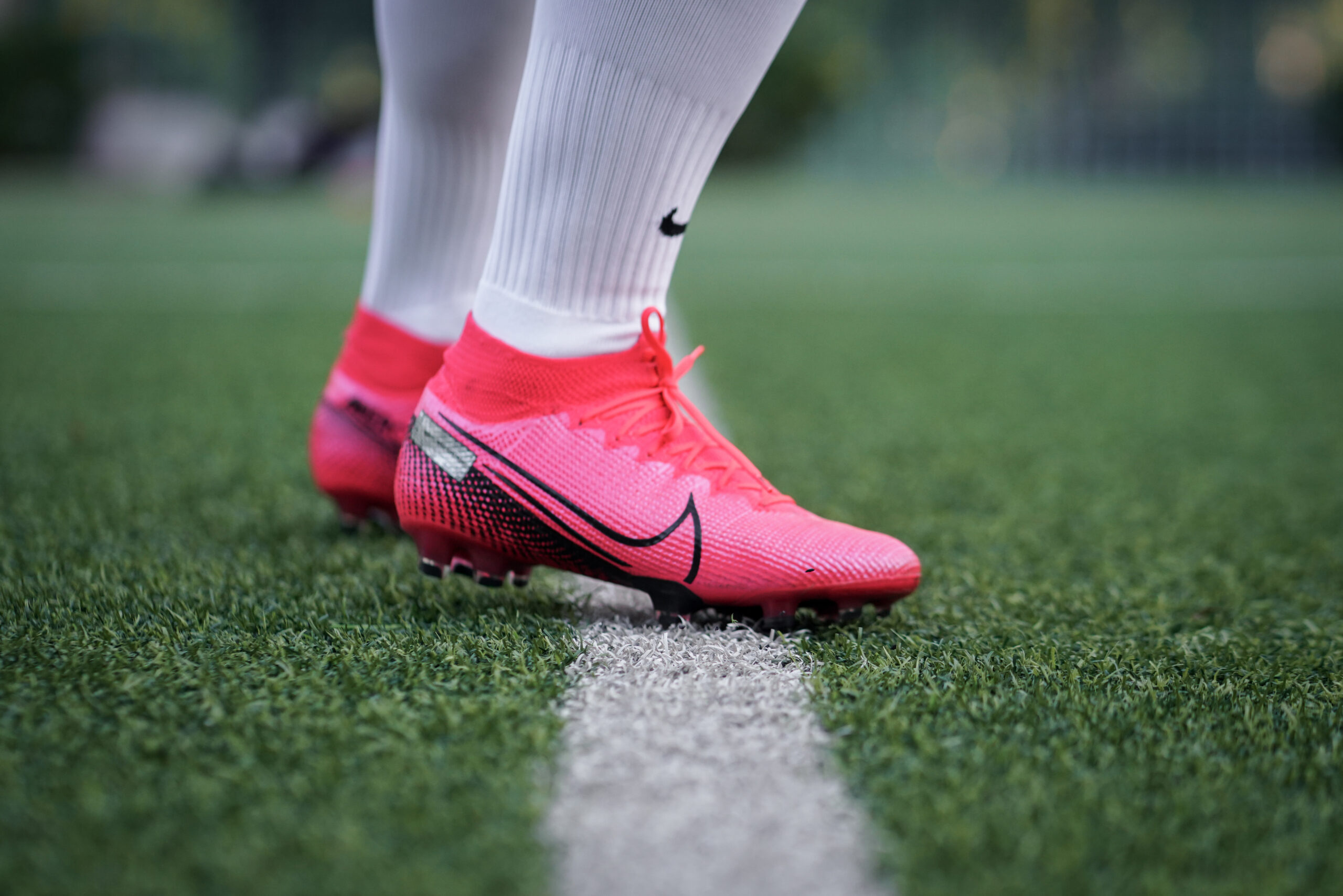
Cleats are an essential part of any soccer player’s gear, designed to provide traction, balance, and support during play. The soles feature studs or patterns that help players move quickly and stay stable while running, turning, or stopping on the field. Since soccer is played on different surfaces—like natural grass, artificial turf, or indoor courts—specific cleats are made to match each type.
Wearing the right cleats for the surface not only improves performance but also helps prevent injuries by offering better grip and reducing pressure on the feet and joints. Knowing which cleats to wear is a simple but important step for playing safely and effectively at any level.
What Does AG Mean in Soccer Cleats?
AG stands for Artificial Grass. These cleats—also referred to as AG shoes, AG boots, or cleats AG—are designed to perform on synthetic turf. Unlike natural grass, artificial fields have higher friction and less give. That’s where AG cleats come in.
They use shorter, more numerous studs to distribute pressure evenly across your foot. This design reduces injury risk and enhances comfort. Simply put, when players ask, “what does AG mean in soccer cleats,” the answer lies in purpose-built traction and safety.
Why Choose AG Soccer Cleats for Turf Fields
AG soccer cleats are tailored for synthetic surfaces. They give players improved grip, especially during quick cuts and turns. They also help cushion impact and reduce stress on the knees and ankles.
Artificial grass cleats are gentler on turf. This means they contribute to the field’s longevity, especially when used on high-end products like Realturf systems. Whether you prefer leather or synthetic uppers, AG cleats are a smart investment in performance and safety.
AG vs. FG: Which Soccer Cleats Are Best for Artificial Grass?
Firm Ground (FG) cleats are built for natural grass. They feature longer, more widely spaced studs. While some players use them on turf, this isn’t ideal. Why? Because FG cleats can cause discomfort or even increase injury risk on harder synthetic surfaces.
AG cleats, on the other hand, are made for this exact challenge. They grip turf better and provide stable footing. In short, if you want the best cleats for artificial grass, go with AG shoes.
Can You Use SG Cleats or Firm Ground Boots on Artificial Grass?
Many players ask, “Can I use SG cleats on AG?” The short answer is no. SG cleats have metal studs meant for soft, muddy natural fields. On artificial grass, they can be dangerous and damage the surface.
Similarly, people wonder, “Can you use SG boots on artificial grass?” Again, it’s not advised. Even FG boots, while less risky, are not optimal. They lack the right stud pattern for artificial turf. For safety, comfort, and field integrity, always use AG-rated cleats.
Best AG Soccer Boots for Artificial Grass
Finding the right pair of cleats can significantly impact your performance on artificial grass fields. Here are three essential tips to consider when selecting the perfect AG soccer boots:
- Optimal Traction: Look for cleats specifically designed with artificial grass stud configurations. Brands like Nike, Adidas, and Puma offer specialized AG soleplates that provide superior grip and prevent injury by distributing pressure evenly across your foot.
- Comfort and Fit: A snug yet comfortable fit is crucial for peak performance. Consider boots that feature adaptable upper materials—such as premium synthetic fabrics, leather, or knit—that mold naturally to your foot shape, allowing comfort and responsiveness throughout the game.
- Lightweight and Agile Design: Choose cleats that offer lightweight construction and flexibility. Brands like Mizuno, Nike, and Puma emphasize lightweight builds to enhance agility, speed, and quick directional changes, helping you stay ahead on artificial surfaces.
Prioritizing traction, comfort, and agility ensures you select soccer boots that best match your playing style and maximize your performance on artificial grass.
Artificial Grass Soccer Cleats: Leather vs. Synthetic Options
Material matters. Leather cleats offer superior touch and a custom feel as they mold to your foot over time. If you value control and comfort, artificial grass leather cleats are a great pick.
Synthetic AG boots are lighter and more water-resistant. They usually require less break-in time. For players prioritizing speed and durability, synthetic models often make the most sense. Both materials work well when designed specifically as AG cleats.
Youth Artificial Turf Soccer Shoes: What to Look For
Buying for a young player? Start with sizing. Youth artificial turf for soccer shoes should fit snugly, without pinching or leaving too much room.
Look for shoes with good midsole support and cushioning. Features like reinforced toes and padded collars help with durability and comfort. Youth AG cleats should help kids stay stable and safe as they learn the game.
How to Choose the Best Soccer Shoes for Artificial Grass
Start by assessing how often you play and on what type of surface. AG cleats are best for regular turf use. Look for a stud layout that spreads pressure evenly and provides multi-directional grip.
Your position can also guide your choice. Defenders might want extra ankle support, while midfielders could prioritize balance and comfort. From cleat shape to materials, every detail affects your performance.
Can You Wear AG Cleats on Grass?
You can wear AG cleats on grass, but it depends on the field. On dry, firm natural surfaces, AG cleats will function reasonably well. But on wet or soft ground, they may lack grip.
Frequent transitions between surfaces may warrant owning both AG and FG cleats. That way, you’re always equipped for safe and optimal play.
Turf Shoes vs. AG Soccer Cleats: What’s the Difference?
Turf shoes—also known as artificial turf shoes—have small rubber nubs on the outsole. They are perfect for older or worn-down synthetic fields.
AG soccer cleats, by contrast, are made for modern artificial grass systems. They feature longer studs arranged to give players the best mix of grip and cushioning. If you’re playing on full-sized, newer turf fields, AG cleats are the better option.
AG soccer cleats are the ideal footwear for artificial grass surfaces. Whether you call them cleats AG, AG soccer boots, or AG shoes, they deliver the traction, comfort, and durability synthetic turf demands. From casual kickarounds to competitive matches, the right cleats elevate your game.
Choose AG cleats that match the quality of your playing surface. Realturf’s FIFA® certified fields deserve footwear built for peak performance.
When playing soccer on artificial grass, selecting the appropriate footwear is essential to optimize performance and safety. Modern artificial grass systems, like those used on FIFA® certified fields, are engineered to deliver consistent ball behavior, shock absorption, and player protection. These surfaces rely on advanced fibers and infill technology that replicate the feel of natural grass while enhancing durability and safety.
By understanding how different turf systems function, players can make smarter choices about their footwear—ensuring better traction, reducing injury risks, and improving overall performance. When paired with the right cleats, high-quality synthetic turf creates the ideal environment for confident, dynamic play at any level of the game.
Get Your Personalized Quote Today!
Looking to create a high-performance soccer field that pairs perfectly with your AG cleats? Contact Realturf today for a personalized quote tailored to your project.
Whether you’re outfitting a professional training ground, a school pitch, or a community facility, our team will help you choose the best artificial turf system to match your needs. With our premium surfaces and your proper footwear, you’ll deliver the ideal soccer experience from the ground up.

One Response
Just searching for this exact trend and your analysis on stitched fashion are incredible.
Thanks for the detail!