
Why Are More Parks Switching to Synthetic Turf?
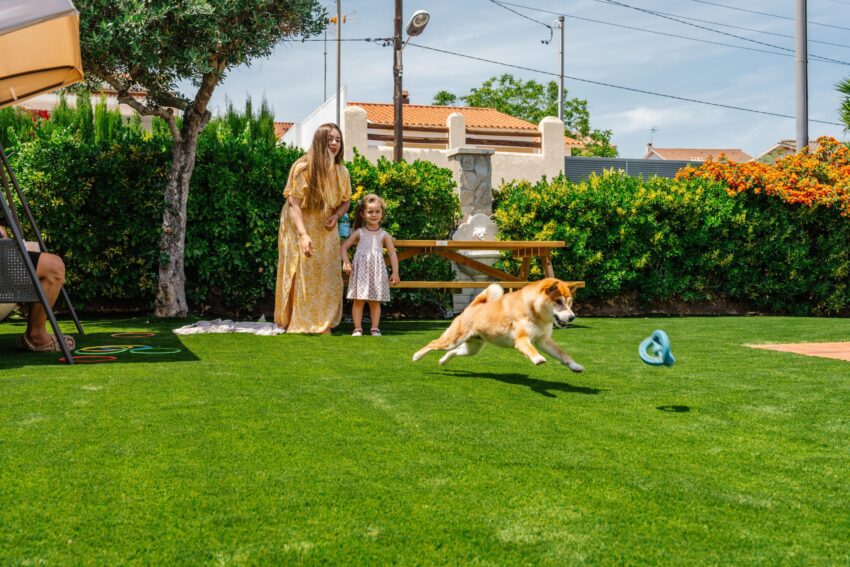
Artificial grass is no longer just for backyards. Cities, dog parks, apartment communities, rooftop amenity decks, playgrounds, and entertainment venues are using synthetic turf because it helps solve three problems people notice immediately: mud, wear, and maintenance. For pet areas, turf can help create a cleaner surface for paws, reduce muddy runoff, and keep small urban spaces usable even after heavy foot traffic.
This is especially relevant in markets like Houston, Dallas, West Palm Beach, and Las Vegas, where heat, storms, humidity, drought, and heavy recreational use make natural grass difficult to maintain. Realturf’s internal market content already positions these four cities as key artificial grass markets, with Houston and Dallas serving Texas demand, West Palm Beach supporting South Florida, and Las Vegas supporting desert-climate installations.
Houston: Synthetic Turf Is Quietly Becoming a Dog Park Solution
Houston is one of the best examples of why synthetic turf works in dog parks. Between humidity, fast rain events, heavy shade, and high-use urban spaces, natural grass often turns into mud or bare patches. Synthetic turf gives parks and private dog spaces a cleaner, more consistent surface.
Trebly Park Dog Park — Downtown Houston
One of the clearest Houston examples is Trebly Park Dog Park. Houston reports installing 3,800 square feet of pet turf for the park’s dog runs in Downtown Houston. The space was designed to support dog play without mowing, watering, or fertilizing, while keeping the surface green and usable year-round.
This is a great “hidden” example because many visitors may notice the clean dog run but not realize the performance behind the surface. Pet turf systems are chosen for these areas because they need to handle concentrated traffic, urine, cleaning routines, and constant paw movement.
Zoomies Dog Park — Second Ward Houston
Zoomies Dog Park is another strong Houston example. The venue describes itself as Houston’s first members-only dog social club and says it spans nearly 1.5 acres of clean artificial turf, with shaded areas and separate spaces for large and small dogs. Its FAQ also notes that the turf is shaded and regularly misted to help protect dogs’ paws. Installed by local partner installer Texan Turf, this acreage is Pet Premium with pet-friendly partner Enviro-fill to avoid pet odors and elongate turf lifecycle.
For a blog audience, this is a useful point: modern dog parks are not only adding turf because it looks good. They are building full pet experiences around turf, shade, splash zones, supervised play, and easy cleaning.
Levy Park Dog Park — Upper Kirby Houston
Levy Park is a public urban park with a dog park that includes separate sections for large and small dogs. The park’s own visitor page describes the dog park as having turf-covered mounds, trees for shade, a water feature, and a double-gated safety entrance.
This is exactly the kind of park feature people often miss. They may see “dog park” on a map, but the turf-covered play mounds are what make the space more durable, playful, and easier to maintain than a flat natural-grass run.
Dallas: Turf Is Showing Up in Urban Dog Parks and Rooftop Amenities
Dallas has a different turf story. In dense urban areas, synthetic turf is often used where natural grass is difficult or impossible: deck parks, rooftops, apartment dog areas, and compact city dog runs.
My Best Friend’s Park — Klyde Warren Park
At Klyde Warren Park, the dog area known as My Best Friend’s Park has moved to a larger, shadier space at the southwest corner of Pearl Street and Woodall Rodgers Freeway. Klyde Warren Park’s giving page says the dog park features pet-grade turf for a cleaner, more comfortable play surface.
This is a strong Dallas example because Klyde Warren is already a landmark park, but many visitors may not know the dog area uses pet-grade turf. For urban spaces, pet turf is especially useful because it reduces mud, keeps the dog run visually clean, and supports frequent daily use.
The Katy Rooftop Dog Park — Dallas
Another Dallas-area example is The Katy, a luxury high-rise apartment building with a rooftop dog park. 3,300 square feet of synthetic turf for the apartment dog park, including a drainable system and an enzyme cleaner infusion system designed to help maintain cleanliness.
This is not a public city park, but it is important for the blog because rooftop dog parks are one of the fastest-growing use cases for pet turf. Property managers want amenities that stay clean, drain well, and do not require the irrigation and soil depth that natural grass needs.
West Palm Beach: Turf Is Solving Rain, Mud, and High-Traffic Pet Play
In West Palm Beach and Palm Beach County, synthetic turf is useful for a different reason: Florida’s mix of heat, humidity, downpours, and heavy use can quickly damage natural grass. Realturf’s internal West Palm Beach content emphasizes that South Florida installations need UV resistance, fast drainage, and reliable performance through seasonal rains.
BRK Republic — Downtown West Palm Beach
BRK Republic is a dog-friendly bar and off-leash play concept in West Palm Beach. Its official rules page confirms an outdoor, fenced, off-leash area for dogs, while local coverage describes BRK Republic as having more than 2,400 square feet of fenced off-leash fun designed with artificial turf for a cleaner and more comfortable play surface.
This is a great “people don’t know” example because it blends hospitality with pet recreation. The turf is not just landscaping; it is part of the business model. A clean, durable, pet-friendly surface helps make off-leash social spaces possible in a downtown environment.
Lake Ida Park — Delray Beach / Palm Beach County
For a broader Palm Beach County example, Lake Ida Park and Lake Ida West include brand-new, fully accessible playground equipment over artificial turf, according to South Florida Finds. The same park also includes a separate fenced dog park area, making it a strong example of how synthetic turf and dog-friendly recreation often appear together in modern park planning.
This example should be worded carefully: the source confirms artificial turf at the playground area, not necessarily throughout the dog park. Still, it supports the bigger trend that Palm Beach County parks are using artificial turf in public recreation spaces where accessibility, drainage, and durability matter.
Las Vegas: Synthetic Turf Is a Water-Saving Park Strategy
Las Vegas is one of the most important markets for synthetic turf because water conservation and extreme heat shape every outdoor design decision. The City of Las Vegas has reported replacing more than 40 acres of grass with synthetic turf at city sports fields and parks as part of its water conservation work.
Las Vegas Wash Park and Baker Park
The City of Las Vegas announced park upgrades that included an artificial turf soccer field at Las Vegas Wash Park and turf soccer fields at Baker Park. These are not dog parks, but they show how city park systems use synthetic turf to keep high-use recreation areas playable while reducing natural grass maintenance.
For Las Vegas, this is a major blog angle: artificial grass is not only about appearance. In desert climates, synthetic turf can be part of a broader water-saving and maintenance-reduction strategy.
Horizon Crest Dog Park — Henderson / Las Vegas Valley
In the Las Vegas Valley, Horizon Crest Dog Park in Henderson is described by a local guide as having artificial turf, three rotating fenced dog runs, shade, water stations, and waste stations.
This is the kind of local dog park people may not think about when they search “artificial turf near me,” but it shows why pet turf is valuable in desert conditions: cleaner surfaces, less dust, fewer muddy patches after rare storms, and a more controlled dog play environment.
Barx Parx — Las Vegas Indoor Dog Park
Barx Parx is another Las Vegas example worth mentioning, especially for pet owners trying to avoid extreme summer heat. The company describes its indoor dog park as a supervised, off-leash, climate-controlled play environment, and its Las Vegas page lists indoor dog park hours and services, including daycare, boarding, grooming, and training.
While this is a private indoor dog park rather than a public city park, it reinforces the bigger trend: in hot markets like Las Vegas, dog play spaces are being designed around clean, controlled, durable surfaces instead of traditional grass.
Why Synthetic Turf Works So Well in Dog Parks
Dog parks are one of the toughest environments for any landscape surface. Dogs run, stop, dig, roll, urinate, and concentrate traffic into the same zones every day. Natural grass often struggles in these conditions, especially in shaded, urban, or high-humidity areas.
Synthetic turf helps solve common dog park problems:
Mud control: Turf reduces muddy paws after rain and helps keep entrances, sidewalks, and indoor spaces cleaner.
Durability: High-use dog areas can wear down natural grass quickly. Turf provides a consistent surface in heavy-traffic zones.
Drainage: Pet turf systems are designed to move liquid through the surface, which helps support cleaning and odor-control routines.
Lower maintenance: Parks and property managers can reduce mowing, watering, fertilizing, and patch repair.
Better usability: A turf dog park can remain usable in areas where natural grass would struggle, such as rooftops, compact urban lots, shaded runs, and desert climates.
Realturf’s pet and sport turf materials also support this positioning internally: product documentation highlights performance characteristics such as durability, drainage, bacteria-free testing, non-toxic standards, and sport-use resilience.
What Park Owners and Property Managers Should Look For
Not every artificial grass system is right for a dog park. A pet area should be built differently than a decorative lawn. Before choosing turf for a park, rooftop dog run, apartment amenity, or hospitality space, decision-makers should look for:
A pet-specific backing system that allows fast drainage.
A cleaning and odor-control plan that includes regular rinsing and maintenance.
Proper base preparation so liquid moves away from the surface instead of pooling.
Heat-aware design with shade, cooling infill, misting, or water access in hot cities.
Durable fibers that can handle running, turning, and repeated traffic.
Safe installation details around edges, seams, gates, and play mounds.
The best dog park turf systems are not just “green carpet.” They are layered systems that combine drainage, infill, cleaning access, traffic resistance, and pet-safe materials.
FAQ: Synthetic Turf Parks in Houston, Dallas, West Palm Beach, and Las Vegas
Which Houston dog parks have artificial turf?
Houston examples include Trebly Park Dog Park, which has 3,800 square feet of Pet Platinum turf, Zoomies Dog Park, which includes nearly 1.5 acres of artificial turf, and Levy Park Dog Park, which includes turf-covered mounds for play.
Does Dallas have dog parks with pet-grade turf?
Yes. My Best Friend’s Park at Klyde Warren Park features pet-grade turf, and The Katy rooftop dog park uses synthetic turf in a private apartment amenity setting.
Where can dog owners find artificial turf dog spaces in West Palm Beach?
BRK Republic in Downtown West Palm Beach is a dog-friendly bar and off-leash play space, with local coverage describing an artificial-turf play surface. Palm Beach County also has public recreation areas like Lake Ida Park where artificial turf is used in playground applications.
Why is Las Vegas replacing grass with synthetic turf?
The City of Las Vegas has used synthetic turf as part of water conservation efforts, reporting more than 40 acres of grass replaced with synthetic turf at sports fields and parks. Newer park projects have also included artificial turf soccer fields.
Is synthetic turf safe for dogs?
Synthetic turf can be suitable for dogs when the system is designed for pets, installed over the right base, drained properly, cleaned regularly, and supported with shade or cooling strategies in hot climates. Pet-specific turf is different from basic landscape turf because it must handle urine, odor control, and repeated traffic.
The Parks People Don’t Notice Are Showing the Future of Turf
The most interesting synthetic turf installations are not always the biggest stadiums or sports complexes. They are often the everyday spaces people use without thinking twice: a downtown dog run, a rooftop apartment amenity, a shaded dog park, a playground, or a desert city soccer field.
Houston, Dallas, West Palm Beach, and Las Vegas all show the same pattern. Where natural grass struggles with mud, heat, drought, traffic, or maintenance costs, synthetic turf gives park owners and property managers a cleaner, more durable, and more predictable surface.
For dog owners, that means fewer muddy paws. For property managers, it means easier maintenance. For cities, it can mean water savings and longer-lasting recreation spaces. And for installers and landscape professionals, it means a growing opportunity to bring better-performing green spaces to the places people and pets use every day.
Want to take a look at the best options for pet turf from Realturf? Check out our Pet Turf and high-traffic Pet Premium with flow-through backing.