
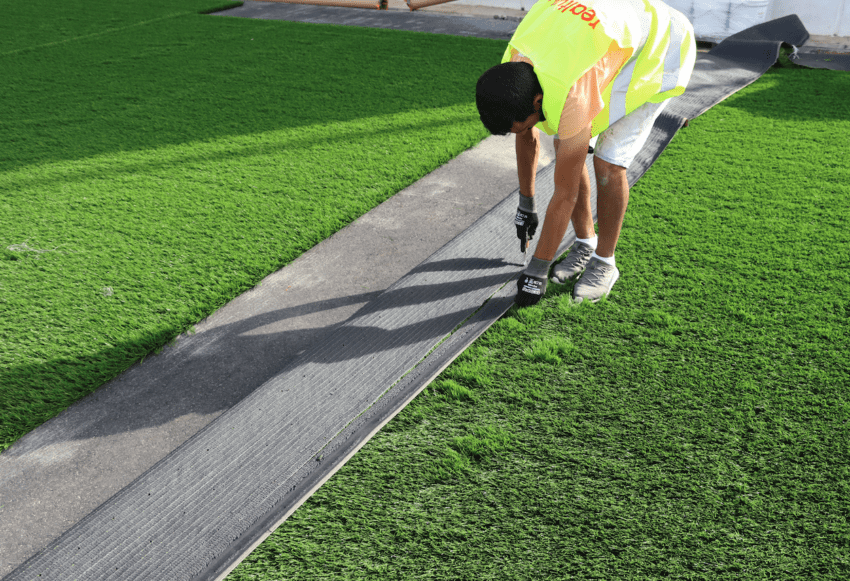
When it comes to installing artificial grass, the key to a long-lasting, beautiful result isn’t just the turf itself. It’s what lies beneath it. The sub-base is the unsung hero that supports your synthetic lawn, controls drainage and ensures everything stays in place.
This guide will walk you through everything you need to know, providing clear and helpful explanations that answer the most common questions people ask when planning an artificial turf project.
What Is the Best Sub-Base for Artificial Turf?
The best all-around sub-base for artificial turf is a Class II road base. It’s made from crushed rock and fine particles that compact into a smooth, stable surface. It’s widely used because it offers a solid foundation, good drainage, and long-term reliability.
However, there’s no one-size-fits-all solution. If you’re in a dry region, decomposed granite is another excellent option. It compacts well and maintains a clean appearance, especially near exposed edges. In wet areas, limestone chat is a top choice thanks to its ability to allow water to flow through quickly. Each material has its strengths depending on your local soil, climate, and project goals.
What Sub-Base Is Needed for Artificial Grass?
Most installations call for a sub-base layer that’s 3 to 4 inches deep. This depth helps prevent shifting, promotes even drainage, and provides enough support for regular foot traffic.
To build this layer, you’ll first need to remove the existing topsoil or turf. Then, lay down a weed barrier to stop unwanted growth. After that, your chosen sub-base material (like a Class II road base) is spread and compacted until it forms a level, solid surface. This step is essential. Cutting corners here could mean uneven turf, puddles, or erosion over time.
What Base Do You Put Under Artificial Grass?
A typical artificial grass installation has a few key layers that work together:
First, you clear out the old grass or soil and grade the area to ensure proper drainage. Then, you apply a weed barrier fabric. On top of that comes the compacted sub-base, which creates the primary support. Some installers then add a thin layer of sand for leveling, especially if the base material is coarse.
After the sub-base is set, the artificial turf is rolled out, trimmed, and secured in place. Finally, infill is applied to help weigh down the grass and support the blades.
Each layer plays a role, but the sub-base is the most important.It’s the backbone of the whole system.
How Do I Apply Filler to the Turf Installation?
Applying infill is the final step once your artificial grass is laid out and secured. Infill helps the blades of turf stand upright, adds cushioning underfoot, and keeps the turf from shifting over time.
Most homeowners use silica sand as a standard infill. It’s affordable, effective, and easy to work with. If you’re installing turf for sports or high-impact use, crumb rubber provides more bounce and shock absorption.
To apply infill, use a drop spreader to distribute the material evenly over the turf. Then, brush it into the fibers using a stiff broom or power brush. This ensures that the infill settles deep into the turf, doing its job without affecting the lawn’s appearance.
What Is a Suitable Base for Artificial Grass?
A suitable base offers both support and drainage. It should be firm enough to maintain its shape over time, but porous sufficient to allow water to pass through easily.
Class II road base is suitable for most areas because it compacts tightly while still allowing for adequate drainage. In wetter regions, crushed rock or limestone chat might perform better. For dry climates, decomposed granite holds up well and adds visual appeal when partially exposed.
Whatever material you choose, make sure it’s installed with proper depth and compaction. A good base not only keeps your turf flat and stable but also reduces maintenance issues and extends the life of your installation.
What Is a Sub-Base?
The sub-base is the foundation layer beneath artificial turf, placed between the natural soil and the grass surface. It’s made up of compacted materials, such as crushed stone, granite, or recycled base.
Its main job is to create a stable, well-draining platform that holds the turf in place and prevents problems like buckling, puddling, or uneven wear. Without a proper sub-base, artificial turf won’t last and it won’t look perfect, either. This is why it’s crucial to begin with a properly prepared base layer, even if the turf itself is top-of-the-line.
Is Artificial Turf Permeable to Water?
Yes, artificial turf is designed to let water pass through. Most products have a perforated backing that allows rainwater to drain straight through to the ground below.
But good drainage doesn’t come from the turf alone. Your sub-base plays a considerable role in managing water. If the materials under the grass don’t let water move away quickly, you could end up with puddles or even turf damage. That’s why it’s essential to use well-draining materials in your sub-base and ensure the area is properly graded so that water flows where it should.
What to Put Under Artificial Grass for Drainage?
If drainage is a concern, and it often is,the best approach is to use a crushed stone or gravel mix for your sub-base. These materials allow water to filter through rather than pool on the surface.
Start by laying down a permeable weed barrier fabric. This stops weeds but doesn’t trap moisture. Then, apply 3 to 4 inches of a draining sub-base material, such as limestone chat or Class II road base. Compact it well so it stays in place but still allows water to pass through.
In exceptionally wet areas, add perforated drainage pipes beneath the base layer to carry water away more quickly. Think of it as insurance for your synthetic lawn.
Final Thoughts on Getting the Base Right
Your artificial turf is only as good as the sub-base underneath it. From preventing wrinkles to handling rainfall, the right base material is what turns synthetic grass into a truly low-maintenance, high-performance lawn.
So don’t rush this step. Select the suitable sub-base for your climate, soil type, and project size and ensure it is adequately compacted. Whether you’re doing it yourself or working with a pro, a well-built sub-base will set the stage for a lawn that looks great and lasts for years.
Ready to take the next step? Send us a message and let Realturf help bring your artificial grass project to life.